

OpenAI: Real Ads, Fake Ad.
Plus how to create infographics on a whiteboard with Gemini
Welcome back!
The Super Bowl has come and gone, with the usual media frenzy that builds up to it, barely holds its breath through it, and then unleashes a firehose of headlines and think pieces for days after.
From the domination of the Seattle Seahawks, to the massive vibe that was the halftime show, to the near-monopoly of halftime ads by AI companies, there was no dull moment.
But there was one “special” ad from a popular company that didn’t air for a very good reason: it wasn’t real. Meanwhile, other ads did air taking shots at that company’s ads stance.
If I had a dollar for every time I typed “ads” in this issue, I could buy an ad for this newsletter.
Let’s dive in.
On deck:
◾ How to create infographics on a whiteboard with Gemini
◾ Fake Superbowl Ad
◾ ChatGPT Ads
◾ Quick Hits of other AI News worth your attention
💡Concept Corner
Practical ideas to work faster and smarter.
How to create infographics on a whiteboard with Gemini
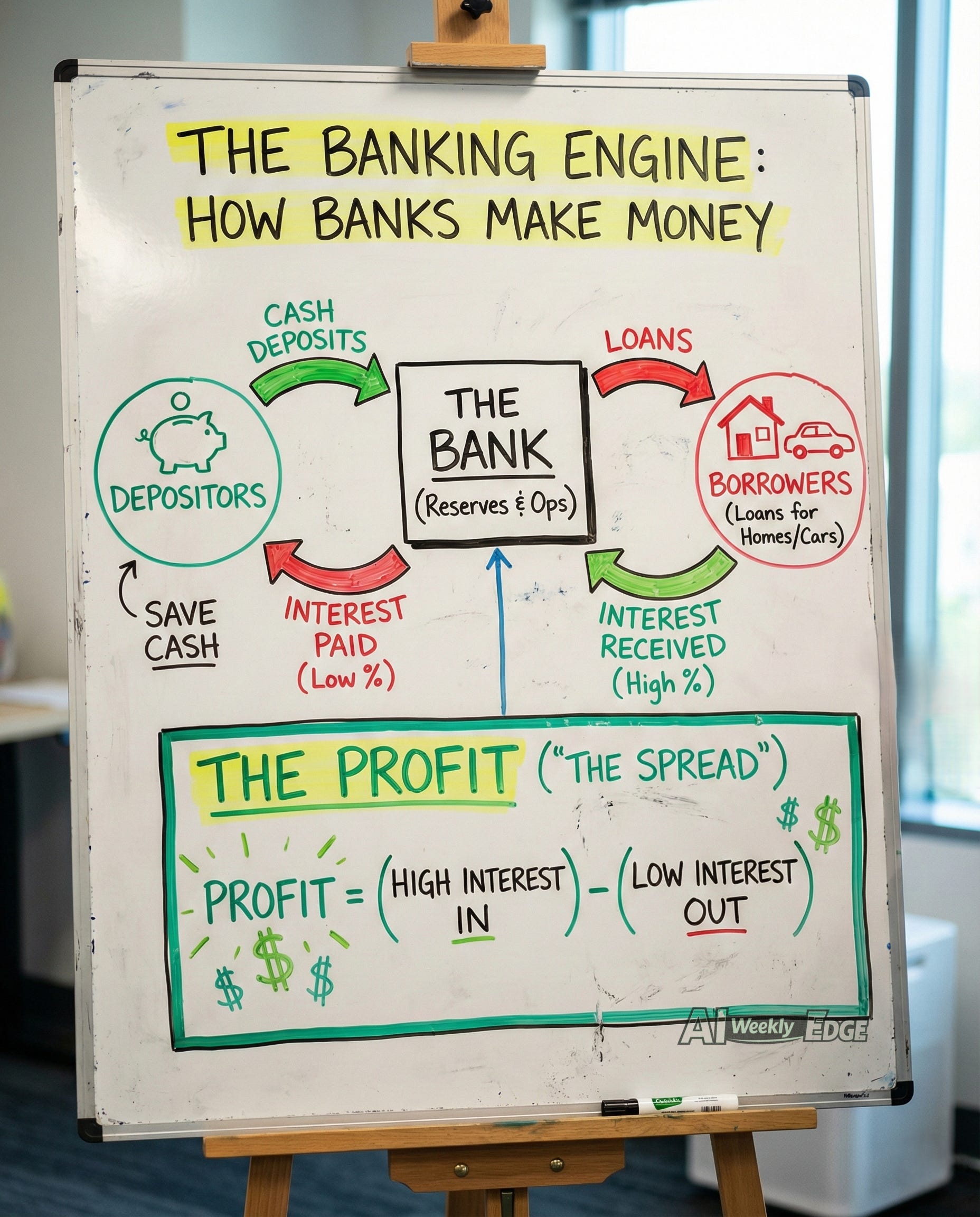
What it is:
We’ve all had to make an infographic at some point, and if you haven’t, you should try this one today.
A lot of people respond better to “organic” content that looks like a real brainstorming session, not a sterile corporate slide.
Gemini can help you create an organic-looking infographic you can use for a bunch of different use cases.
Prompt:
Create a high-resolution image of a large white-board on a wooden easel. On the board is a detailed, hand-drawn infographic explaining [INSERT TOPIC OR IMAGE DESCRIPTION HERE].
All text, diagrams, and icons must be hand-sketched using multi-colored dry-erase markers (black, red, green, and blue) with [yellow or other choice] highlighter for emphasis. The layout should include hand-drawn boxes, circles, and connecting arrows. Ensure the lines are slightly imperfect with visible marker texture and light smudges for authenticity. Strictly no digital fonts; all text must be legible, hand-printed marker writing.
How to use it:
For text inputs, just replace the bracketed text with your topic (e.g., “how a solar panel works” or “the 4 pillars of a successful newsletter”).
If you are using this as a “style reference” for another image, modify the beginning part of the prompt using this: “Create a hand-drawn whiteboard version of the attached image, following the layout of [IMAGE DESCRIPTION].”
📡Signal behind the buzz🔊
Decoding trending AI stories.
📍Fake Superbowl Ad
🔊Buzz:
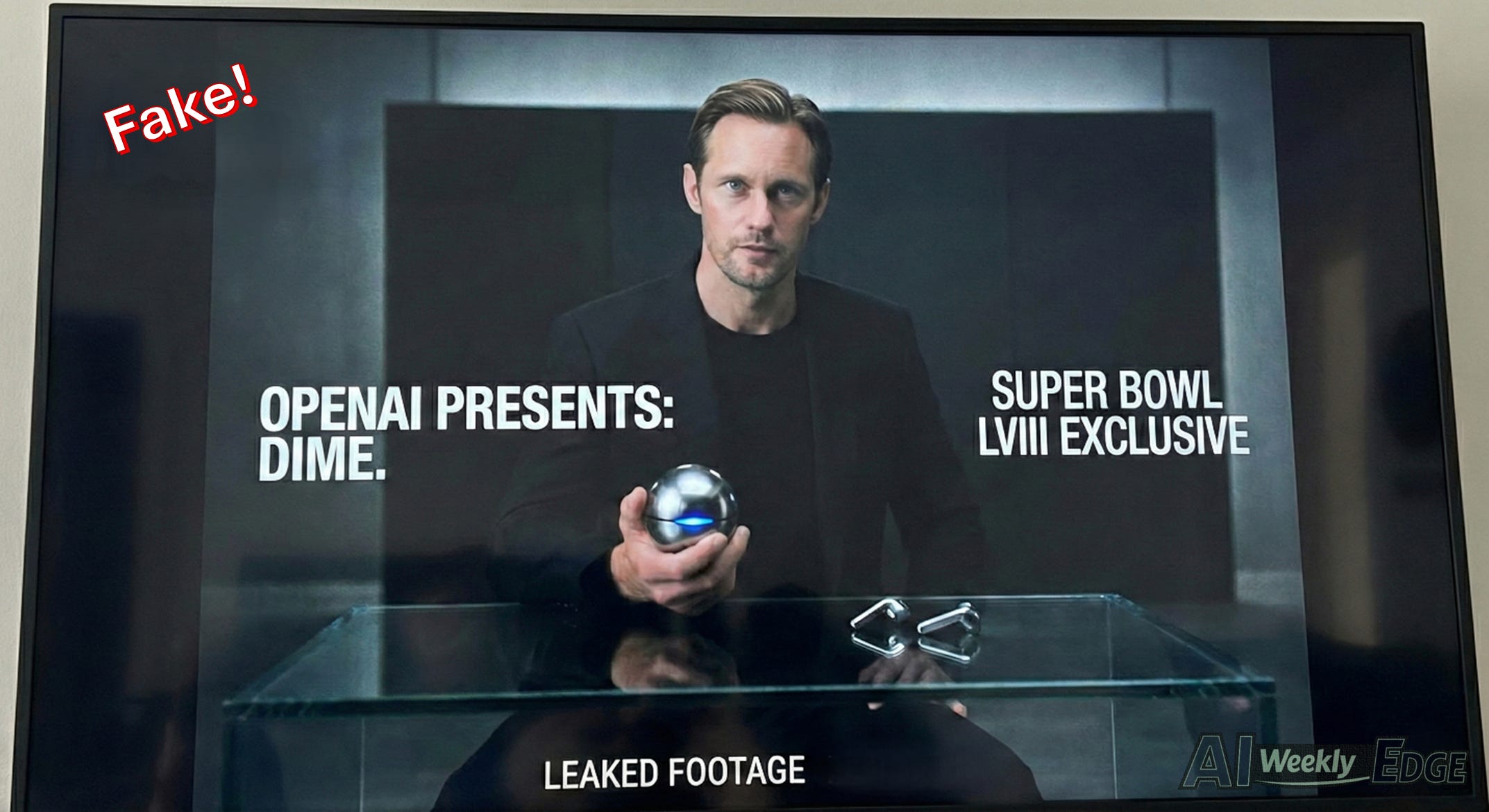
A “leaked” OpenAI Super Bowl ad went viral on Reddit and X, showing actor Alexander Skarsgård promoting futuristic earbuds and a shiny orb device supposedly called “Dime.” It spread fast because it fit the existing narrative that OpenAI is working on consumer hardware, so this looked like the first reveal.
📡Signal:
It was a hoax. OpenAI publicly called the ad fake, then reporters started finding signs of coordination: newly created accounts and fabricated references.
There are even claims that people were offered payment to amplify the story.
The bigger issue here is not that it fooled a lot of people, but that we now live in a world where high-quality fake marketing is cheap to produce and believable enough to share.
🎯Impact:
The defense is old-school media literacy: look for primary confirmation, check whether credible outlets corroborate, and be wary when a story arrives fully packaged (video, website, quotes) from anonymous and/or newly created accounts.
📍ChatGPT Ads
🔊Buzz:
OpenAI just started testing ads inside ChatGPT for U.S. users on the “Free” and “Go” tiers. The ads are labeled and sit below the chat, but the hot takes have not been merciful (not that they must be).
Even Anthropic piled on with two Super Bowl ads mocking the idea of ads appearing in AI conversations. See the other ad below. Barbs aside, I think they’re funny.
📡Signal:
AI chat is costly to operate, and ads are a familiar way to subsidize “free.”
OpenAI says ads are clearly separated from answers and advertisers won’t steer responses. However, ads may be personalized using your conversations and history, with an opt-out that can reduce your daily free messages.
🎯Impact:
Even if Sam Altman and every OpenAI employee is a saint with a halo over their head, its tough to believe commercial influence will always stay separate from advice once you introduce ads.
For workplaces, the safest move is paid tiers plus strict policies for anything sensitive.
🍵Quick Hits of Other AI News
🧑💼 OpenAI launched two new “AI coworker” tools: Frontier (for companies to automate operations/workflows) and GPT-5.3-Codex (a coding agent that can work longer without timing out).
🧑💻 Anthropic upgraded Claude Opus 4.5 to Opus 4.6 to code better, fix bugs more reliably, and (beta feature) handle huge inputs, up to ~1M tokens (a massive amount of text/code at once).
🚀 Elon Musk combined SpaceX and xAI in a gigantic deal, arguing that Starlink + Grok + rockets could become the backbone for future AI infrastructure (including the idea of space-based data centers).
🛑 Nvidia’s planned AI-chip sale to ByteDance now depends on conditions set by the U.S. government: export rules will decide what chips can go where.
🩺 Doctors are warning that AI health apps can be unsafe or inaccurate for diagnosis, and Apple has removed at least one skin-scan app after user complaints.
⚖️ The EU is threatening temporary antitrust measures against Meta after allegations it blocked competing AI services from using WhatsApp’s Business API.
🎙️ France’s Mistral released Voxtral Transcribe 2, a faster speech-to-text model that can keep up with live speech and can label who’s speaking (known as diarization). They also released the “weights” (the actual trained parameters of the model), so developers can download it, run it themselves, and fine-tune it, without needing Mistral’s servers.
Thanks for reading, see you next week!
-Michael.