

Judgment Upgrade Loop, Siri's brain transplant
And more; plus some important updates
Welcome back!
I’ve been paying attention to what matters most to you, so I’m making a few updates to match. My goal remains for every issue to be actionable, free of bloat, and genuinely worth your time each week.
Beginning next week, the newsletter will have a new name: AI Weekly Edge (AWE). It better reflects the clarity and practical advantage I want to deliver, and avoids the conspiratorial vibe “declassified” has started to pick up in the AI world over time.
Second, starting this week, I’m moving away from broad tool reviews to keep the focus on execution.
So, I’m replacing “Tool Spotlight🔦” with an occasional special segment called “Workflow Lab🛠️”: specific, high-impact workflows using AI tools (not just reviews).
“💡Concept Corner” stays as your weekly strategy guide for any LLM.
Finally, here’s the new structure: Concept Corner → Workflow Lab (occasional) → Signal Behind the Buzz (1–2 trending AI stories) → A refined Top 5 Quick Hits (down from 10 for the rest of the week’s standout AI news).
On deck:
◾ Decision Journal: The Judgment Upgrade Loop.
◾ Apple taps Gemini for Siri
◾ OpenAI’s Healthcare Moves
◾ Quick Hits of 5 other AI News worth your attention
💡Concept Corner
Practical ideas to work faster and smarter.
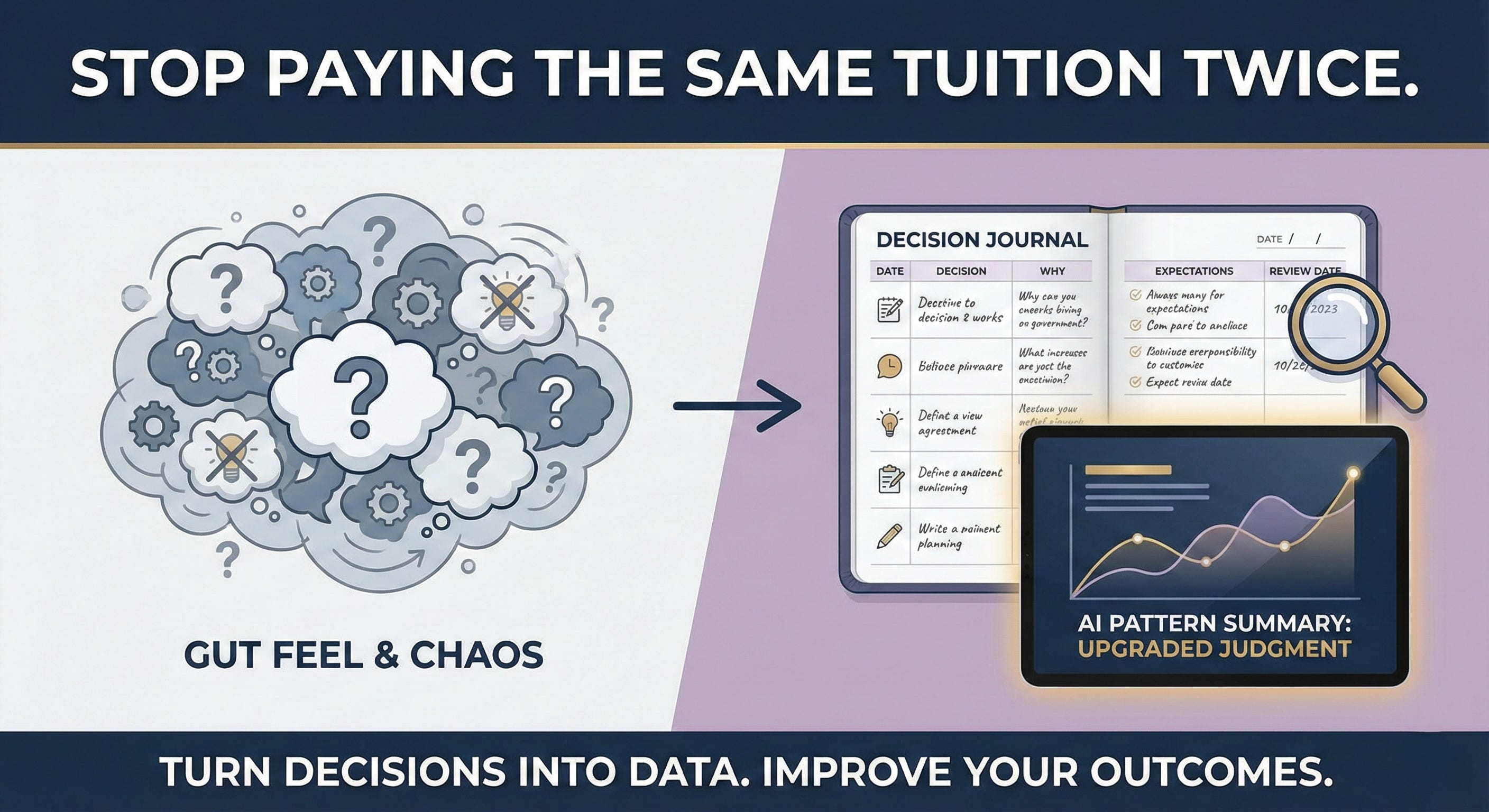
📍Decision Journal: The Judgment Upgrade Loop.
What it is:
Ever look back on a big call and wonder, "What on earth was I thinking?" A decision journal could keep you from paying that tuition twice.
When you make a meaningful move: hiring, pricing, investment, strategy, etc., you write down the decision, why you chose it, what you expect to happen, and what would prove you wrong.
That one page turns “gut feel” into something you can test. Over time, it reveals whether you’re consistently optimistic, overly cautious, or quietly ignoring certain risks.
Real-world example:
Say you’re debating whether to raise prices in your business.
In the moment, your brain is doing aerial gymnastics: fear of churn, desire for margin, ego about positioning, anxiety about timing, pressure to look “premium,” and so on.
So, you log the decision plus the assumptions you’re betting on--who will notice, who will complain, how conversion should move, what retention should look like. Then set a review date.
Two months later, you compare reality to your forecast. After a while, you can use AI to summarize patterns across your last ten decisions.
This helps you upgrade your judgment for future decisions.
Use this prompt template:
Act as my judgment coach. Your job is to help me upgrade my judgment for future decisions using my decision journal entries. First, if any entry is missing key info, ask only the minimum questions needed to fill: decision, context, drivers, alternatives rejected (and why), assumptions, predicted outcome(s), confidence level (%), what I noted would prove me wrong.
Then:
Extract patterns across entries: assumptions I over/under-trust, risks I ignore, recurring emotional triggers, default biases, and where my confidence is mis-calibrated.
Identify what I’m consistently right about vs wrong about, including ‘right result, wrong reasoning’ and ‘wrong result, good process.’
Produce 3–7 reusable “judgment upgrades”: rules of thumb, red flags, and questions I should ask before committing in future judgement calls.
Here are the entries (most recent first): [paste your decision journal entries]
📡Signal behind the buzz🔊
Decoding trending AI stories.
📍Apple taps Gemini for Siri
🔊Buzz:
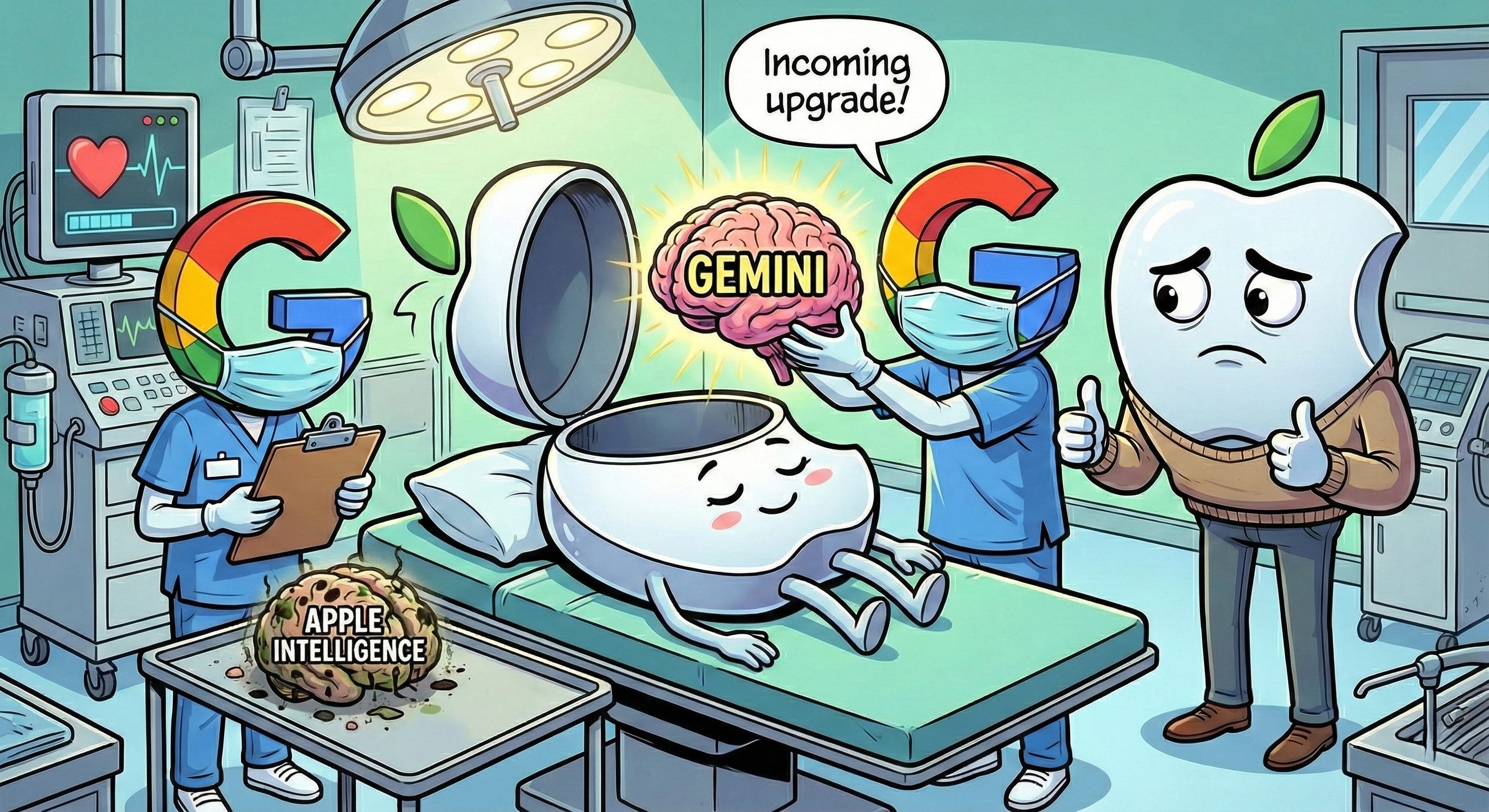
Apple’s long-awaited Siri “revamp” is trending for a surprising reason: it will lean on Google’s Gemini models. This brain transplant is not surprising to me though--Apple has been lagging in the AI race compared to fellow tech giants.
Online, the hot takes swing between “Apple gave up on AI” and “Your iPhone is now a Google product.” There’s also a lot of chatter about privacy and antitrust concerns.
📡Signal:
This isn’t a white flag; it’s a supply-chain shortcut. Training and running frontier models is expensive and slow; licensing a strong model can leapfrog years of catch-up.
Apple and Google say Gemini will underpin Apple’s next-gen “Apple Foundation Models,” with Apple still controlling how Siri behaves, what data it can access, and where processing happens (on-device or via Apple’s private cloud).
In other words: Apple is buying an engine, not outsourcing the whole car.
🎯Impact:
Expect Siri to get more coherent and (please 🙏🏼) and more useful.
The real story is the power shift: Gemini serving as a core engine for iPhone AI features gives Google a lot of leverage in the AI era.
For the rest of us, the Golden Rule of AI still applies: treat every answer as a draft, not a fact.
📍OpenAI’s Healthcare Moves
🔊Buzz:
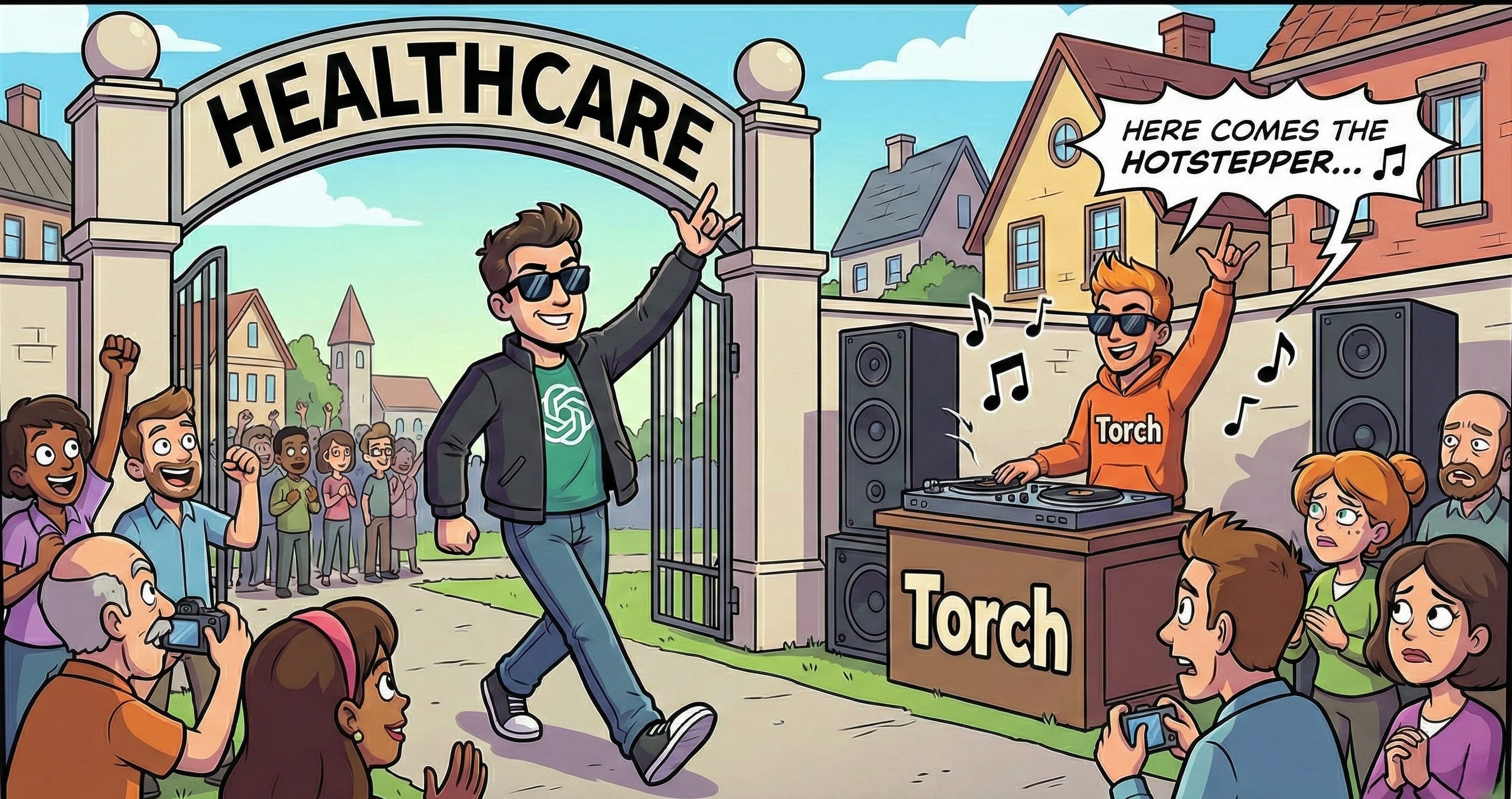
OpenAI’s healthcare push is everywhere this week: a new ChatGPT Health offering, plus the acquisition of a healthcare app startup called Torch.
📡Signal:
What’s actually happening is workflow engineering.
OpenAI is packaging tools for hospitals and health organizations, like summarizing charts, drafting patient instructions, etc., with controls aimed at regulated data (audit logs, encryption options, and support for HIPAA-style agreements).
Torch’s value isn’t size; it’s glue. It works on unifying messy inputs: labs, meds, visit notes, and recordings, into a timeline so an AI assistant can answer practical questions like “What changed since my last visit, and what should I ask next?”
The combined result (ChatGPT Health + Torch) is closer to a secure, personalized health-information organizer and prep assistant than a tool that makes diagnoses.
🎯Impact:
Done well, these moves could cut the paperwork tax that burns out clinicians and leaves patients confused.
Done poorly, it can amplify two risks: hallucinations (confidently wrong summaries) and privacy erosion (sensitive data drifting farther than you expect).
The safest mindset: use AI to organize and prepare. And always verify medical decisions with a licensed professional.
🍵Quick Hits of Other AI News
💰OpenAI and SoftBank dropped $1B into SB Energy (owned by SoftBank) to back a 1.2GW Texas data center for Stargate (AI’s next bottleneck isn’t chips, it’s electricity).
⚡Meta unveiled Meta Compute initiative for AI infrastructure , aiming for “tens of gigawatts” this decade (the electricity demand could surpass that of small cities, or even small countries! This is why AI giants are flocking to nuclear).
👷🏼Anthropic is not to be outdone. They rolled out Claude for Healthcare: HIPAA-ready tools plus connectors to common medical systems, and previewed Claude Cowork: a Mac desktop “agent” for file chores (receipts → spreadsheets, folder cleanup).
📝France’s armed forces ministry signed a framework agreement with Mistral AI, keeping models hosted on French infrastructure (World Powers are slowly but surely incorporating AI into defense).
⚖️The EU’s new AI Code of Practice guidance tightens how deepfakes get labeled and how transparency duties work.
Thanks for reading, see you next week!
-Michael.